Choosing the best China Refrigerator Tape requires more than comparing prices. Global buyers must examine adhesive strength, temperature resistance, liner quality, and aging performance. A tape that holds firmly in a warm warehouse may fail inside a cold transport container. That difference matters.
Dr. István Benedek, a recognized pressure-sensitive adhesive researcher, explains the core principle: “A pressure-sensitive adhesive must balance tack, peel, and shear.” This balance helps tape stick quickly, resist lifting, and remain stable under stress. It also explains why one product cannot serve every refrigerator application.
Some buyers need aluminum foil tape for insulation joints. Others need double-sided foam tape for mounting panels. Protective tape may be better for painted surfaces and stainless-steel doors. Each option should be tested on the actual substrate. Not just cardboard.
A reliable supplier should provide technical data, batch information, adhesive composition, thickness tolerances, and storage guidance. Ask for samples before placing a large order. Test them after cold exposure, heat exposure, humidity, and repeated handling. Small details reveal major weaknesses.
Certification can support confidence, but paperwork is not performance. Buyers should verify relevant RoHS, REACH, packaging, and destination-market requirements. Factory audits, production photos, and traceable test reports add useful evidence. Still, they cannot replace practical trials.
This guide compares Chinese Refrigerator Tape options for global buyers. It considers application fit, consistency, customization, lead time, and total cost. The cheapest roll may create expensive rework. That is easy to overlook. A better decision combines measurable data with cautious field judgment.
Which China Refrigerator Tape Is Best for Global Buyers?
Refrigerator Tape Types: PVC, PET, Aluminum Foil, and Butyl Options
Choosing refrigerator tape depends on the surface, temperature, and expected service life. PVC tape is flexible and economical. It works well for wire bundling, temporary protection, and smooth plastic surfaces. However, its adhesive may soften in warm warehouses or leave residue after long storage.
PET tape offers higher tensile strength and cleaner handling. I often prefer it for appliance assembly, label protection, and tight packaging tasks. It resists stretching better than PVC. Yet, PET can feel less forgiving on uneven surfaces. Small surface gaps may reduce contact. That detail is easy to miss.
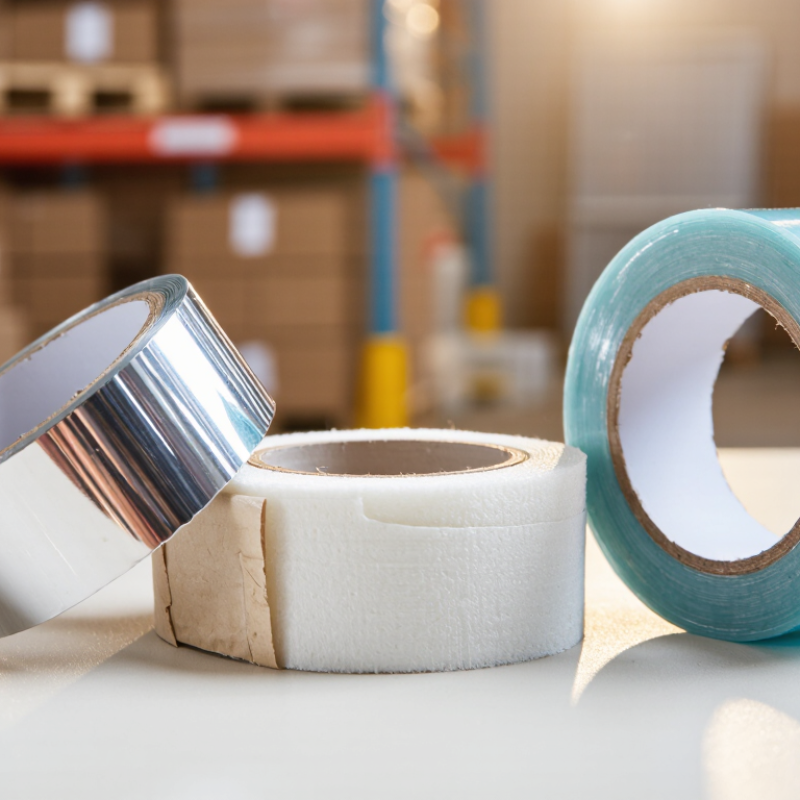
Aluminum foil tape reflects heat and provides a useful vapor barrier. It suits insulation joints, duct-like areas, and metal panels. The foil can wrinkle during application, so careful pressure matters. Butyl tape remains soft and highly conformable. It seals irregular edges and resists moisture effectively. Its surface may attract dust, especially in open production areas.
In sample evaluations, I check peel adhesion, unwind force, residue, and performance after cold and warm storage. I also test each tape on painted steel, plastic, and foam. A strong result on one material proves little. Requesting batch records and technical data improves purchasing confidence. Still, laboratory results cannot replace a real production trial. I once selected a tape with excellent initial adhesion, but its liner separated poorly during fast application. That mistake changed my inspection checklist.
For global refrigerator buyers, tape selection should begin with measured peel performance, not catalog claims. ASTM D3330 evaluates pressure-sensitive tape adhesion through a 180° peel test. The tape is applied to a defined panel, then pulled backward at a controlled speed. Reported force is usually expressed in N/25 mm.
ASTM D3330 does not provide one universal pass value. A reliable supplier should state the test method, stainless-steel or coated-metal substrate, dwell time, peel rate, temperature, and tape width. These details matter. A tape showing 10 N/25 mm after twenty minutes may perform differently after seven days at −20°C. Cold surfaces can also carry frost, oil, or condensation. Real installation is less tidy.
The International Energy Agency reports that cooling demand could more than triple by 2050. That growth increases pressure on maintenance materials, including sealing and insulation tapes. Buyers should request laboratory results and production-batch records, not one attractive sample. I would also test aged samples, because fresh adhesive can look impressive. A clean number can still mislead. Peel failure may appear as adhesive residue, backing split, or sudden edge lifting. Those failure modes deserve separate notes in the purchasing specification. Testing at 23°C is useful, but insufficient for export conditions. Include hot, cold, humid, and vibration exposure before approving a refrigerator tape.
Which China Refrigerator Tape Is Best for Global Buyers?
Cold resistance should be tested, not accepted from a product label. Many refrigerator tapes claim −40°C performance, yet freezer doors face moisture, frost, and repeated flexing. The U.S. Department of Energy uses about 0°F (−17.8°C) for freezer testing, while ASHRAE guidance commonly treats −18°C as frozen-food storage. A genuine −40°C rating therefore provides useful margin, but only if adhesion survives condensation and peel stress.
Ask for test records based on ASTM D1000 or IEC 60454 methods. Check peel adhesion after conditioning at −40°C, not only the initial value at room temperature. A practical comparison can include 24 hours at −40°C, followed by 50 peel cycles. Heat aging matters too. Test samples at 80°C for 168 hours, then measure adhesion, elongation, and residue. Some converters also use 100°C aging for 500 hours. These conditions expose adhesive migration and brittle backings.
Look for numbers.
A −40°C result without dwell time is weak evidence. ASTM D1000 emphasizes controlled temperature and humidity, commonly near 23°C and 50% relative humidity before testing. Ask whether the reported peel value is measured immediately or after recovery. This detail changes decisions. I have seen tapes remain attached but lift at the corners after thermal cycling. That failure is easy to miss. Supplier reports should include batch numbers, substrate type, dwell time, and failure photographs. No single rating proves global suitability.
| Anonymous Tape Profile | Backing / Adhesive | Total Thickness (mm) |
Recommended Application Temperature |
Service Temperature Range |
180° Peel Strength (N/25 mm) |
Peel Retention After −40°C / 24 h |
Peel Retention After 70°C / 168 h |
Static Shear at 23°C (h, 1 kg) |
Relative Suitability |
|---|---|---|---|---|---|---|---|---|---|
| Profile A — Premium Cold-Climate Grade | PET film / modified acrylic | 0.080 | −10 to 40°C | −40 to 90°C | 3.6 | 89% | 91% | >168 | Excellent |
| Profile B — General Refrigerator Grade | BOPP film / solvent acrylic | 0.060 | 0 to 40°C | −30 to 80°C | 3.1 | 81% | 86% | >120 | Very Good |
| Profile C — High-Tack Assembly Grade | PE film / rubber-resin adhesive | 0.100 | 5 to 40°C | −25 to 70°C | 4.2 | 72% | 69% | 72 | Moderate |
| Profile D — Cost-Optimized Utility Grade | OPP film / water-based acrylic | 0.050 | 10 to 35°C | −20 to 60°C | 2.4 | 58% | 61% | 36 | Limited |
For global buyers, the best refrigerator tape is not simply the strongest roll. Its compliance file matters just as much. RoHS screening should cover restricted substances in the tape, liner, adhesive, and printed ink. Ask for a recent test report, not a recycled PDF.
REACH SVHC checks require closer attention. The candidate list can change, and supplier declarations may become outdated. Request the material composition, safety data sheet, and a written SVHC statement. Confirm the report matches the exact tape grade, production site, and batch. A generic declaration is weak evidence. It often leaves too many questions.
ISO 9001 certification shows that a supplier operates a quality management system. It does not prove RoHS or REACH compliance. Review internal inspection records, incoming-material controls, lot traceability, and corrective-action reports. During supplier evaluations, check whether adhesive changes receive documented approval. Small changes matter. A different release liner can affect residue, bonding, or chemical results. The uncomfortable lesson is that tidy paperwork may still hide poor traceability. Buyers should also test adhesion after cold storage, vibration, and humidity exposure. Compliance and performance must be checked together. A supplier that shares limitations openly may be more reliable than one promising perfect results.
For global buyers, the best China refrigerator tape is not always the cheapest roll. Performance depends on adhesive stability, liner quality, temperature resistance, and clean application. Ask suppliers for technical data, batch records, and a clear MOQ. Some factories accept 500 rolls for trial orders, while others require 5,000. A low MOQ may increase unit cost, but it reduces inventory risk.
Request samples within 7–15 days, including different widths and adhesive grades. Test them on painted metal, plastic, and cold surfaces. Check peeling force after 24 hours and again after refrigeration. The first sample may look excellent. Ours once did, but the backing curled after storage. That result changed our inspection checklist. Do not rely only on photos or a supplier’s standard report.
Lead time often ranges from 15–30 days after approval, excluding production delays for custom printing or special slitting. Confirm whether the clock starts after deposit, artwork approval, or sample confirmation. Incoterms also change the real buying cost.
EXW gives the buyer more logistics responsibility, while FOB usually includes delivery to the export port.
CIF may simplify ocean freight, but destination charges can surprise inexperienced buyers.
DDP can be convenient, yet customs and tax responsibilities must be documented carefully.
Put every agreed specification, tolerance, packing detail, and delivery date in the purchase contract.
PVC tape is flexible and economical. It works well on smooth plastic surfaces. Warm storage may soften its adhesive. Residue can remain after long storage.
PET tape offers higher tensile strength and cleaner handling. It resists stretching during appliance assembly and tight packaging. Uneven surfaces can reduce contact. Small gaps matter.
Aluminum foil tape suits insulation joints, metal panels, and duct-like areas. It reflects heat and provides a vapor barrier. Apply steady pressure. Wrinkles can weaken the seal.
Butyl tape remains soft and highly conformable. It seals uneven edges and resists moisture. Dust may stick to its surface. Keep open production areas clean.
Check peel adhesion, unwind force, residue, and storage performance. Test painted steel, plastic, foam, and cold surfaces. Measure peeling after 24 hours. Repeat after refrigeration, vibration, and humidity exposure.
Request recent restricted-substance test reports, material composition, and safety data sheets. Ask for a written SVHC statement. Confirm the exact grade, site, and batch. Old reports are weak evidence.
No. A quality-management certificate does not prove chemical compliance. Review inspection records, lot traceability, and corrective actions. Check whether adhesive or liner changes need approval.
Trial quantities may range from 500 to 5,000 rolls. Request samples within 7–15 days. Production may take 15–30 days after approval. Confirm when the delivery clock starts.
Compare EXW, FOB, CIF, and DDP responsibilities carefully. Destination charges can surprise inexperienced buyers. Record packing, tolerances, specifications, and delivery dates. Cheap rolls may become expensive later.
No. Laboratory results cannot show every application problem. I once approved excellent initial adhesion, but the liner separated poorly. That mistake changed my checklist. Production trials reveal uncomfortable details.
Choosing the right Refrigerator Tape for global purchasing requires more than comparing prices. Buyers should first evaluate the main material options, including PVC, PET, aluminum foil, and butyl tape, according to the refrigerator’s surface, insulation needs, flexibility, and application method. Performance should be verified through 180° peel adhesion testing under ASTM D3330, while cold resistance comparisons should include freezer performance at temperatures as low as −40°C and results from heat-aging tests. These checks help confirm whether the tape can maintain adhesion and stability during transportation, storage, and long-term use.
Supplier qualification is equally important. Review RoHS and REACH SVHC documentation, along with ISO 9001 quality records, to support consistent and responsible sourcing. For international projects, compare MOQ requirements, 7–15-day sampling availability, production lead times, packaging capability, and suitable Incoterms. A supplier offering clear test data, reliable documentation, flexible sampling, and transparent logistics terms can help buyers select Refrigerator Tape that balances performance, compliance, and total purchasing cost.

YONGJIA Electronic