The 2026 search for leading Self Adhesive Cover Tape suppliers reflects a larger shift in electronics manufacturing. Semiconductor demand is rising, while component packaging requires tighter control, cleaner materials, and faster delivery. The World Semiconductor Trade Statistics forecast global semiconductor sales to reach about US$772 billion in 2026. SEMI also reports continued expansion in worldwide fab capacity, creating stronger demand for reliable packaging consumables.
These figures do not measure cover tape directly. That limitation matters. However, they show why supplier evaluation cannot depend on price alone. A dependable supplier should demonstrate stable peel strength, consistent adhesion, low particle generation, and compatibility with common carrier tapes. Packaging engineers should also review release behavior, antistatic performance, temperature resistance, and sealing results on actual production equipment.
Industry practice commonly references EIA-481 requirements for tape-and-reel packaging. Supplier audits should examine batch records, inspection methods, cleanroom controls, and complaint response times. A sample roll may look perfect under factory lighting. Production can reveal uneven sealing, adhesive transfer, or difficult peeling. Small defects become expensive when thousands of components are processed hourly.
This 2026 supplier overview compares manufacturing experience, technical support, customization, geographic coverage, and documented quality systems. Public market reports provide useful direction, but they cannot replace technical trials. A ranking can never be completely objective. Procurement teams should verify every claim through samples, certificates, and line testing before approval. The best supplier is not always the largest. It is the one that performs consistently when the line is busy.
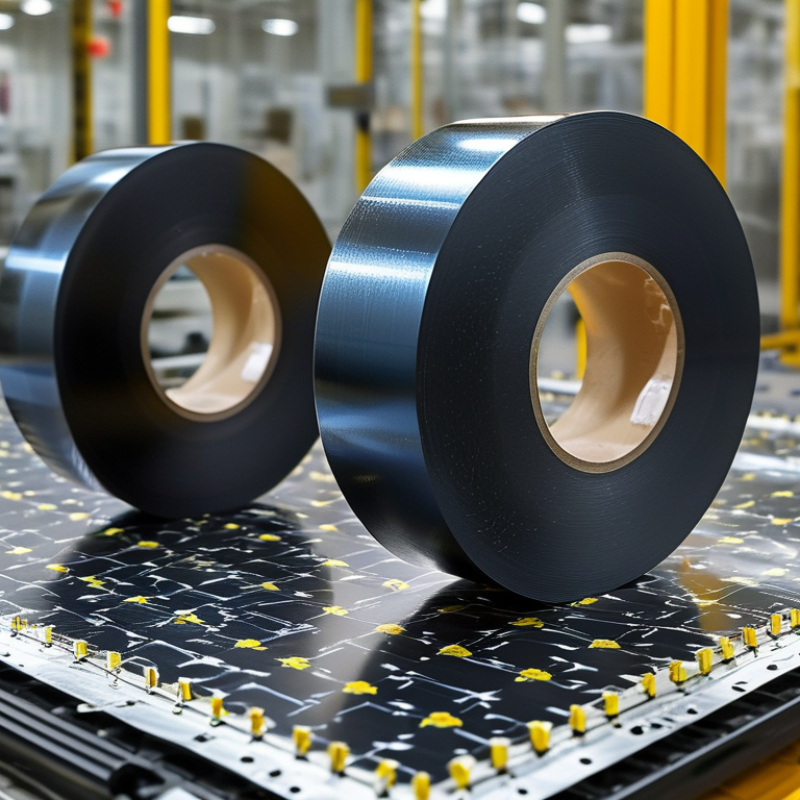
Self-adhesive cover tape protects components inside 8–88 mm carrier tape packaging. It seals the pocket while allowing controlled peeling during automated assembly. That balance is critical. Too much adhesion can deform pockets or slow pick-and-place equipment. Too little adhesion can expose components during transport.
For narrow 8–24 mm carrier tapes, suppliers should offer stable sealing across small contact areas. Wider 32–88 mm formats need stronger dimensional control and uniform adhesive coating. Clear tape helps operators inspect component placement. Antistatic performance also reduces dust attraction and discharge risks. In practical trials, I check peel force, seal continuity, tape flatness, and residue after opening. Small errors matter.
A reliable supplier should provide lot traceability, technical data, and repeatable test results. Samples should be tested with the actual carrier material, sealing temperature, and packaging speed. Storage conditions deserve attention too. Heat and humidity can change adhesive behavior over time. I once focused too heavily on initial peel strength and overlooked aging performance. That was a useful correction. The best 2026 sourcing decision may not be the cheapest option. It should be based on process compatibility, measurable consistency, and responsive technical support. Supplier audits, production records, and clear change notifications can reduce avoidable packaging failures.
The 2026 supplier landscape is shifting toward material-specific performance, not broad product claims. PET cover tape remains popular for its dimensional stability, clean die-cutting, and balanced transparency. It suits many automated packaging lines where consistent peel force matters. Ask suppliers for measured peel-force ranges, sealing temperatures, and lot-to-lot data. Details decide.
PS tape often supports cost-sensitive applications and offers easy processing. However, its lower toughness can create problems during high-speed feeding or sharp bending. Static control also deserves close attention near sensitive components. A reliable supplier should provide controlled resistance data, storage guidance, and sample rolls from current production. Fit matters more.
Polycarbonate tape serves applications requiring stronger impact resistance, higher temperature tolerance, or excellent optical clarity. Its performance can justify a higher price when inspection systems demand stable visibility. Suppliers should explain thickness tolerances, adhesive compatibility, and sealing-window performance under actual machine settings. Trial results matter more than a polished specification sheet.
A practical evaluation should include peel-force testing after aging, humidity exposure, and repeated handling. Engineers should also inspect edge quality under magnification. One weakness in many comparisons is assuming material type predicts total performance. It does not. Adhesive formulation, coating uniformity, liner release, and winding tension can change results significantly. Procurement teams should review traceability, technical response time, and corrective-action records. Some suppliers communicate well before sampling, then respond slowly after a process issue appears. That gap deserves attention.
In 2026, self adhesive cover tape suppliers should be judged by measurable performance, not attractive catalogs. The key benchmark is a stable thickness between 0.05 and 0.10 mm. This range supports compact packaging while maintaining practical handling strength. Even a 0.01 mm variation can affect sealing pressure and component protection.
Controlled peel strength matters just as much. Suppliers should report peel results in N/25 mm, with test speed, angle, temperature, and substrate clearly stated. A reliable supplier provides batch records and samples for production trials. Peel values must remain consistent after storage, transport, and exposure to normal factory heat. A perfect number on paper can still fail during high-speed application. In practice, adhesive transfer, edge lifting, or difficult removal may appear only after several hours. I have found that small surface differences often change results. This part deserves more testing than many teams expect.
Tips: Request samples from at least two production batches. Test them on the actual cover material, not only laboratory panels. Check thickness with calibrated equipment. Record peel strength before and after aging. Ask suppliers to explain any variation, even when it seems minor. A supplier that admits limits may be more dependable than one promising universal performance.
In 2026, selecting a self adhesive cover tape supplier requires more than checking peel strength. IEC 60286-3 defines tape-and-reel packaging requirements, including pocket dimensions, cover tape behavior, and component protection. A compliant supplier should provide test records for seal strength, peel force, antistatic performance, and storage stability. Small variations matter. Excessive peel force can lift tiny components from the carrier pocket.
RoHS restricts ten substances, including lead, mercury, and certain phthalates. REACH compliance also requires supply-chain communication when products contain Substances of Very High Concern. ECHA’s Candidate List has exceeded 240 substances, showing why an old declaration may be insufficient. Ask for dated material declarations, not general promises. IEC 61340-5-1 guidance supports controlled handling, grounding, and electrostatic protection. Yet, a tape can meet surface resistance targets and still create charge during peeling. That gap deserves practical testing.
Tips: Request lot-specific certificates and three-month aging data. Test the tape with your actual carrier material, feeder speed, and humidity range. Review adhesive residue under a microscope. Keep samples from every approved lot. A supplier may pass paperwork and fail production; this is where experience still matters.
Reference comparison of measurable compliance checkpoints for IEC 60286-3, RoHS, REACH, and ESD protection. The figures are screening references, not supplier performance scores.
RoHS currently restricts 10 substance groups. REACH verification should include an SVHC declaration, Candidate List screening, and applicable restriction review because the ECHA Candidate List is dynamic. IEC 60286-3 checks tape-and-reel packaging conformity, while ESD evaluation commonly covers material, surface, and system-level resistance characteristics.
Supplier ranking should begin with production evidence, not attractive pricing. I compare MOQ against monthly demand, storage limits, and expected scrap. A small MOQ helps pilot runs, but repeated orders may create hidden freight costs. Ask for MOQ by width, adhesive type, and custom packaging. Confirm whether sample quantities match mass-production materials.
Lead time needs two figures: quoted time and actual delivery history. Record order dates, shipment dates, and delays across several batches. Yield deserves greater weight than speed. Check peel strength, sealing consistency, residue, wrinkles, and tape alignment under real machine settings.
Test performance after humidity exposure and temperature changes. A supplier reporting only average yield is not enough. Request lot-level data and corrective-action records.
A useful 2026 score could assign 35% to yield, 25% to lead time, 20% to MOQ, and 20% to global support.
Global support includes regional inventory, technical response time, clear certificates, and service across time zones. A supplier may answer quickly but lack local replacement stock. That weakness matters during a line stoppage.
I would also interview two current users, if possible, and compare promised response times with actual support.
No ranking is perfect. Market demand changes, and one audit can miss a recurring defect. Keep the scorecard active after approval, not filed away.
: It seals pockets in carrier tape packaging. It protects components during transport and supports controlled peeling during assembly.
It can support widths from 8 to 88 mm. Narrow formats need stable sealing across small contact areas.
Yes. Widths from 32 to 88 mm need stronger dimensional control and uniform adhesive coating.
Excessive adhesion may deform pockets or slow automated equipment. Weak adhesion can expose components during transport.Small errors matter.
Test peel force, seal continuity, tape flatness, residue, wrinkles, and alignment. Use the actual carrier material and machine settings.
Heat and humidity may alter adhesive behavior over time. Test samples after temperature and humidity exposure.Test it.
Compare yield, lead time, MOQ, and global technical support. Production evidence matters more than attractive pricing.
One practical score gives yield 35%, lead time 25%, MOQ 20%, and global support 20%.
Request lot-level yield data, technical documents, traceability, production records, and corrective-action information.
Delivery delays, recurring defects, and market changes may appear later. I once focused too heavily on initial peel strength.That was a useful correction.
Self Adhesive Cover Tape is an essential component in carrier tape packaging for electronic components ranging from 8 to 88 mm. In 2026, leading suppliers are expected to provide reliable PET, PS, and polycarbonate tape solutions tailored to different component sizes, surface conditions, and automation requirements. Key technical benchmarks include a controlled thickness of approximately 0.05–0.10 mm, stable sealing performance, and consistent peel strength that protects components while supporting smooth high-speed processing.
Supplier evaluation should extend beyond material selection and basic pricing. Buyers should verify compliance with IEC 60286-3, RoHS, and REACH requirements, along with effective ESD protection where sensitive devices are involved. Important selection factors include minimum order quantity, lead time, production yield, quality consistency, customization capability, technical support, and global logistics coverage. A well-qualified supplier should demonstrate dependable batch-to-batch performance, clear testing documentation, and the flexibility to support both standard packaging programs and specialized carrier tape applications.

YONGJIA Electronic